Managing Autoimmune Flares with Diet
Understanding Autoimmune Flares: Managing Through Diet
Autoimmune conditions can be challenging, with symptoms often flaring up unexpectedly. For those experiencing these flares, understanding how diet impacts their condition is crucial. This blog explores how certain foods can trigger symptoms and how dietary changes can help manage autoimmune disorders.
What Are Autoimmune Flares?
Autoimmune flares occur when the body’s immune system mistakenly attacks its own cells, exacerbating symptoms such as pain, fatigue, and swelling. Identifying and managing triggers can significantly improve one's quality of life.
Key Triggers of Autoimmune Flares
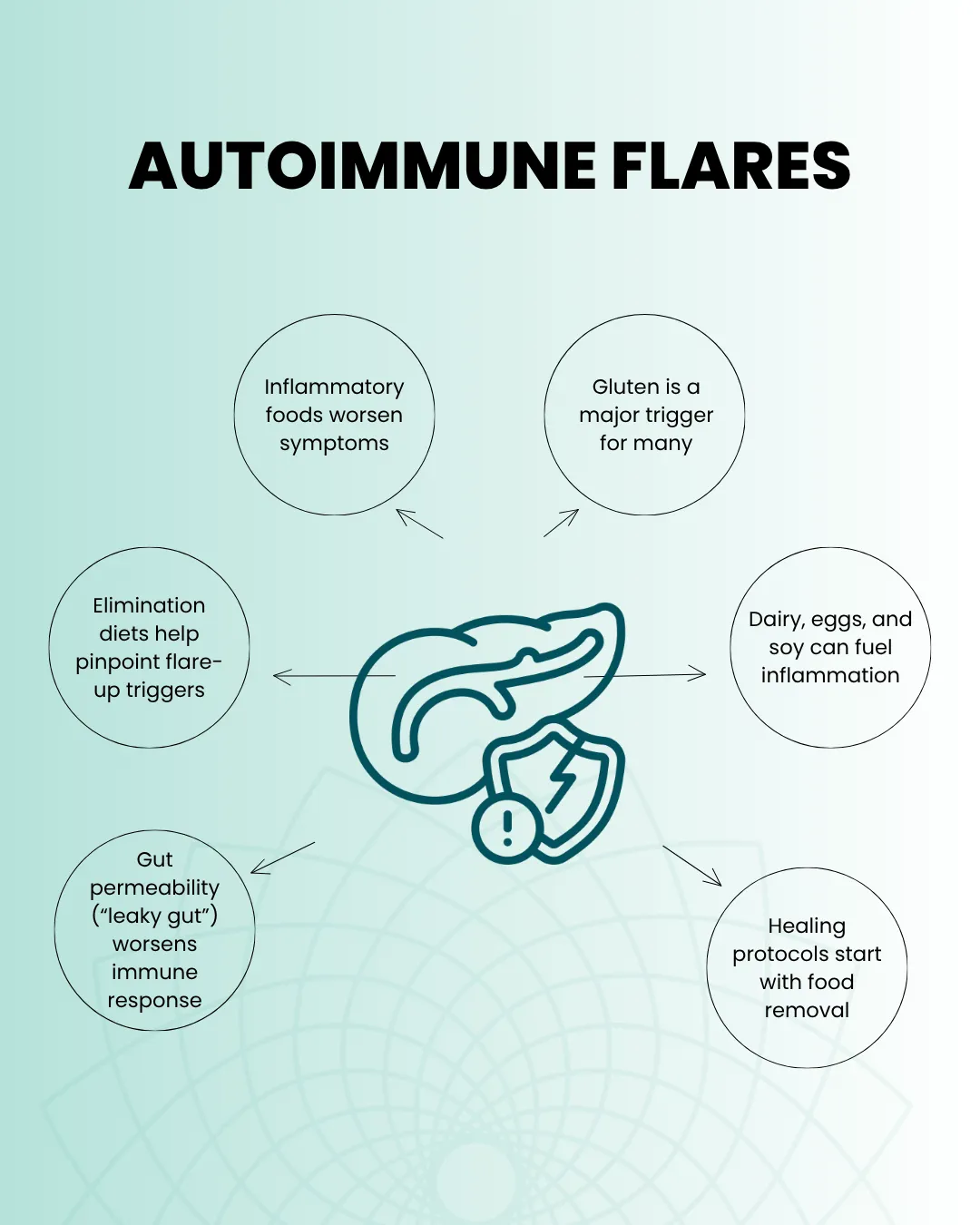
- Inflammatory Foods Worsen Symptoms: Foods that trigger inflammation can exacerbate autoimmune symptoms. Processed and sugary foods are often culprits.
- Gluten: For many people, gluten can be a major trigger. Avoiding foods like bread and pasta that contain gluten can reduce flare-ups.
- Dairy, Eggs, and Soy: These common foods can also fuel inflammation. Identifying and limiting them in your diet can help reduce symptoms.
Understanding Gut Health
The health of your gut plays a significant role in autoimmune conditions. Here’s why:
- Gut Permeability ("Leaky Gut"): When the gut barrier is compromised, it may worsen the immune response. Maintaining gut health is essential.
Effective Dietary Approaches
Managing autoimmune conditions through diet involves a few key strategies:
- Elimination Diets: These diets help pinpoint foods that trigger flare-ups. By removing potential trigger foods and reintroducing them one at a time, individuals can identify which foods are problematic.
- Healing Protocols: Many healing protocols begin with eliminating certain foods. This helps the body reset and reduces inflammation over time.
Practical Steps to Manage Autoimmune Flares
For those looking to control autoimmune symptoms, consider these practical dietary steps:
- Limit processed and high-sugar foods.
- Consider a gluten-free diet, especially if gluten seems to worsen symptoms.
- Experiment with cutting out dairy, eggs, and soy to see if symptoms improve.
- Focus on whole foods and maintain good hydration to support overall health.
Conclusion
Managing autoimmune flares through diet requires careful attention to how different foods affect the body. By understanding potential triggers and adopting an elimination diet, individuals can better control their symptoms and lead healthier lives. Your journey to managing autoimmune conditions with diet begins today.